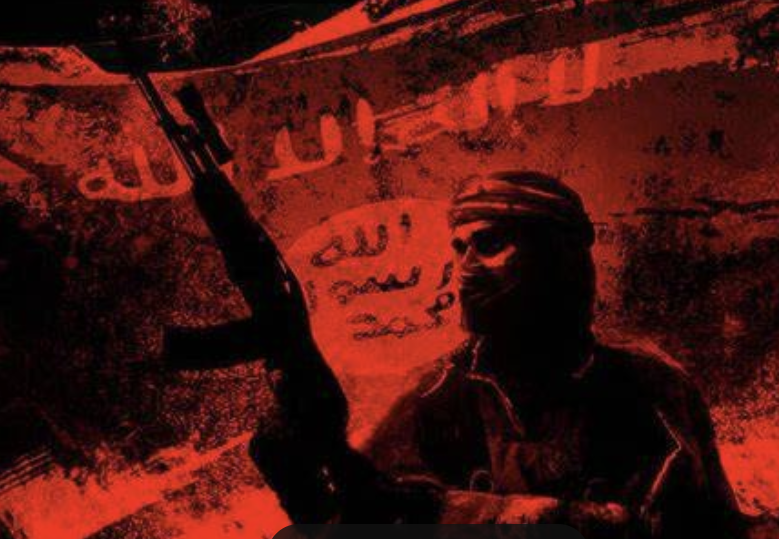
“Terrorism is the preferred weapon of weak and evil men”
~Ronald Reagan
By Xavier Lim
Preface
Terrorism is defined as the unlawful use of violence and intimidation, in particular against civilians, for political causes. Since the 9/11 attacks in New York at the turn of the millennium, terrorism has risen to notoriety as one of the global communities’ greatest humanitarian and institutional threats. Having established itself as a perennial threat to government institutions and national systems, terror organisations have succeeded in shaking the sociocultural and multilateral landscapes that dictate the current world order, one that sees the American hegemony waning on multiple fronts. In this essay, a brief history of major terror organisations will be covered alongside an analysis of recent developments regarding major terror organizations in the middle east, southeast asia and the western world.
Jemaah Islamyah
The main player in the southeast asian arena for decades has been the Jemaah Islamiah (JI) group. Founded as part of the global intifada movement as an affiliate of the Al-Qaeda organisation, JI seeks to bring the islamic jihad to the southeast asian region. From the year 2000 to 2005, JI was responsible for some of the deadliest attacks in Indonesia, having claimed responsibility for prominent events including the 2002 Bali bombings and the 2003 Marriott Hotel bombing in Jakarta.
At its peak in the early 2000s, JI operated via the acquisition of various properties strewn across the Indonesian landscape, operating in plain sight in villages, towns and isolated territories that served as training and recruitment grounds for JI fighters. JI recruits were trained in jungle and urban warfare, explosives handling, bomb manufacturing, kidnapping and evasion that were specifically catered towards the resistance of law enforcement during the raids on suspected JI compounds. Simultaneously, the strong relationship between JI and Al-Qaeda enabled the exchange of JI fighters to war-torn countries in the middle east, namely Syria, wherein JI fighters were expected to gain experience on conducting warfare using conventional arms against established enemy forces.
At the root of its effectiveness in carrying out a string of attacks post-2001 was the steady stream of funding that was acquired via individuals that networked between both terror organisations. Cash from the Middle East, alongside illegal transactions from agents stationed in Malaysia and Singapore enabled JI to acquire, build, and purchase components crucial for bomb production. Weapons and explosives were also documented to have been smuggled from breakaway regions in the Philippines and the Aceh province, which faced armed conflict at the time, and the Indonesian mainland proved to be fertile recruitment grounds for future JI fighters susceptible to radicalisation.
Recent trends of Jemaah Islamiah are inconsistent with mainstream islamic terror organisations during the war on terror, with the supposed dissolution of the organisation into peaceful factions that operate primarily in the Indonesian archipelago. Efforts by law enforcement, comprising of international task forces and joint cooperation of intelligence services across the region, have resulted in a decapitation of the organisation alongside strong re-education attempts that have penetrated certain remote communities in an attempt to prevent the recruitment of supporters for the jihaad, especially in vulnerable muslim communities that populate Indonesia, Malaysia and occasionally Brunei. Unlike other organizations, JI did not utilize a hydra-esque method of generating new generations of leaders to replace those removed, but rather chose to operate as a collection of factions centred around a self-proclaimed moderate core.
Within the last few years, JI has increasingly attempted to legitimize its existence as part of efforts to retain control over what was left of its members by announcing an entry to Indonesian politics, institutions and charities. It is justified for institutions to remain skeptical of its claims of moderacy, and the infiltration of JI into legitimate political institutions pose a potential threat of former terror organizations rooting themselves in governments under the guise of democratic elections in pursuit of attaining popular sympathies despite their retained ability for violence. At the same time, relations between its moderate core and more hardline factions remain unclear, with concerns arising over potential supplementation of resources towards hardliners if the moderate core manages to successfully infiltrate government institutions and its resources. Such attempts present a legal loophole which must be further discussed if countries are to prevent the infiltration fo terrorism into its own foundations.
JI showcased its affinity to publicity during the establishment of various charities, schools and community engagement organisations in efforts to establish itself as a fresh and deradicalised group. With many former leaders still incarcerated, the last few years saw JI leaders host dozens of public seminary sessions with former members covering topics of deradicalisation and integration back into moderate muslim communities. However, suspicions are high regarding the existence of hardline factions that have continued to operate remotely via the remote territories of the Indonesian islands.
Difficulties are also found in the elimination of JI factions due to the density and sprawl of remote communities that still prove to be viable breeding grounds for JI recruitment and the construction of JI camps deep in the Sumatran landscape. At the same time, the smaller, independent hardline factions that occur from the splitting of JI prove more difficult to locate due to its increased agility, hence posing a threat that cannot be countered by the conventional means of organisational decapitation. The explosion of AI has also been harnessed, with attempts of recruitment via online radicalisation content becoming a rising concern in high-density urban areas within the southeast asian sphere.
Impact on society
Southeast asia is unique due to its vibrant array of different multicultural groups that reside within close proximity of each other despite different belief systems, religions and cultures. Given its strategic location, it has been the target of terrorism multiple times in the past due to the desire to control nations that sit along one of the world’s busiest waterways. The recent digitalisation of the populace has presented yet another front for the infiltration of radicalisation just as JI shifts its initiative towards the recruitment of lone wolf radicals that can act on behalf of radical islamic beliefs without having to deploy fighters on the ground.
The presence of radical content has left its mark on the region, with some recent cases of teenagers being radicalised by radical islamic beliefs, believed to be the work of Al-Qaeda and Islamic State affiliates. Lone wolf radicalisation also proves to be particularly difficult to prevent due to the ease of radicalised individuals from blending into an overwhelming online traffic whilst maintaining normalcy on the physical outside. The prevention of lone wolf attacks leaves little room for error and without an overarching, draconian algorithm capable of screening all online content, the possibility of radical content slipping through the gaps is always present. Simultaneously, the implementation of such an algorithm is not possible without strong criticism of government overreach.
At the same time, radicalisation and terrorism remain sensitive topics in multiracial societies which sport populations boasting significant ethnic Chinese, Malay and Indian communities. The conversation of terrorism invokes fears of alienating the mostly peaceful Muslim community that has time and time again attempted to distance itself from radical islam. Public misinformation campaigns online and fears of extremism in response to the volatile middle east and its conflicts also stoke fears of the Muslim community, which remain unfounded. Such naturally threatens the social fabric of nations and poses a hazard to the development of countries if such divisions are left unmanaged, of which only terror organisations would emerge victorious. Policy, media and community must come together to prevent the fracturing of social fault lines in the face of a diversification of political views with respect to the middle eastern conflict and fears of radicalisation.
The Middle East
The Middle East remains the elephant in the room on discussions of islamic terrorism. Instability in the middle east has been a headliner for decades, arguably worsened by the periodic military intervention by western nations in local geopolitics. An unstable middle east is detrimental to the national interests of many nations, wherein trade and sovereignty are put into jeopardy as different factions and parties compete for control over the oil-rich lands of the middle east. Countries like Iraq, Iran, Yemen, Lebanon and Syria also contribute greatly to global terrorism on accounts of their unstable political scene and fertile recruitment grounds for terrorism.
The Islamic State In Iraq and Syria (ISIS)
A prominent player of islamic terrorism would be the Islamic State in Iraq and Syria, or ISIS. Officiated in 2014 after the merger between the ISI and Al-Nasra Front, ISIS reached its territorial peak in mid-2014, having captured major cities in both Iraq and Syria and subjecting millions of civilians to a brutal occupation via an extreme interpretation of Shaira law.
The atrocities committed by ISIS are well known, from the persecution of Shia muslims, Christians and Yazidis to the sexual violence committed en masse against women, the occupation of civilian residential districts by an organised organisation designed as a terror organisation by the United Nationed Secuirty Council (UNSC) speaks for the societal and humanitarian threat terrorism poses. At the time, due to the seizure of military equipment and a lack of credible opposition, ISIS had organized itself as a semi-conventional force similar to the HAMAS militant group seen in Gaza today. After the intervention of the coalition forces led by the USA in late 2014 that crushed ISIS forces and subjugated the forces to remote outposts across the Syrian and Iraqi landscape, many sources have reported on the retreat of ISIS factions into rural zones surrounding the Syrian and Iraqi border.
Al-Qaeda (AQ)
Al-Qaeda remains as the second major player in the arena of Middle Eastern terrorism and has gained equal notoriety as its counterpart and rival, ISIS. Formed as a Sunni-Islamist Jihadist group by the deceased Osama Bin-Ladin (and not to be confused as the Salafi-Islamist Jihadist organisation that is known as ISIS), AQ has been continuously responsible for attacks on a multitude of nations that span the continents of Europe, Asia, America and Africa.
AQ and ISIS have engaged in a series of conflicts that have come to characterise the hostile relationship shared by both groups till today. Founded as part of a student-led resistance to the Soviet invasion of Afghanistan, the decades of armed insurgency carried out by the founding generation of AQ fighters have enabled the organisation to carry out operations against competing organisations and western assets in the region to a disproportionate level of success. In part of sporting a heavier focus on exporting its armed conflict to overseas territories, namely the West, AQ has claimed responsibility on numerous attacks often targeting western political institutions and civilian targets as part of its narrative on ideological Jihadist revenge.
The current state of AQ resembles the loose network of splinter cells and networks that are representative of the remnants of major terror organisations post-American intervention. In part due to extensive law enforcement and military action, reports state of AQ bidding its time via the slow reorganisation of forces and hardware as the group is increasingly attempting to establish influence in Africa and the Sahel. Insomuch as AQ has been heavily weakened by consistent operations conducted against both its territories and leadership, the group is still very much active and capable of carrying out destructive attacks on both regional and overseas targets.
Israel and Palestine
The conflict between Hamas militants and the IDF have dragged on since Israel vowed for retaliation in response to the 7th October attacks in 2023 that resulted in mass civilian casualties. The attack, on top of being a humanitarian tragedy that saw a temporary outpouring of sympathies from the global community, was also just another milestone marking the next key event in a long history of bloody conflicts between Israel and the Palestinian cause that have split the opinions of the global community in a perennial fiasco of controversy.
Hamas, having been elected into power in 2006, remains a key authority in the Gaza strip despite decades-long decapitation attempts by the IDF and Mossad (the central Israeli intelligence agency), and serves yet another example of the futility of military action in removing radical ideology.
While conventional means of operations have been denied to Hamas as of 2026 due to the extensive destruction of HAMAS-operated military hardware (and large tracts of civilian infrastructure along the Gaza Strip), the ideology of fervent anti-semeitism and islamic jihad will remain ingrained in the Palestinian territories for as long as Israel and Palestine fail to achieve a permanent two state solution. Even then, with the volatile situation in the middle east, odds are that grievances would plague the relationship between both nations for decades to come. Currently, whilst multilateral organizations including the United Nations have maintained the insistence for a peaceful resolution to the conflict that has resulted in great civilian suffering, prospects for a two state solution have never been lower.
Syria
The fall of Assad in Syria in 2025 has opened up another vacuum of power which has been taken advantage of by terrorist factions and proxies of the islamic state. During the confusion caused by the fleeing of Assad, mass breakouts were staged that freed up Al-Qaeda forces that were originally detained in mass containment camps originally manned by government forces under the Assad regime. Yet another can of worms was opened with the political instability and crumbling economy presenting another opportunity for the recruitment of unemployed and frustrated military-aged men into extremist militias.
Despite the lack of sizable military maneuvers executed by ISIS in recent years, analysts have warned that the instability in Syria may have enabled flows of weapons, equipment and recruitment towards hidden ISIS outposts along the Iraq-Syria border. In alignment with the assertion by international analysts that ISIS is undergoing a period of restructuring its shattered organisational structure, the long absence of Western military forces in the country alongside the new possible contributions of men and machine by recent political shocks may have present opportunity for the catalysing of yet another resurgence of ISIS as a regional terror-based player.
Iran
Iran has long been under the proverbial umbrella of middle eastern nations facing conflict, with military engagements between the USA and the Iranian regime. While a ceasefire has been recently called, hopes are not high for a lasting peace given that the Iranian regime has been backed into a corner by the USA and Israel in view of its decimated military leadership and weakened regional proxies.
Having legislated Shia Islam as the official state religion and the primary financier of proxies such as the Houthis in Yemen, Hezbollah in Lebanon and other groups in the previously mentioned states, Iran is more than eager to put the entire peninsula in a chokehold over what could be an existential fight for the regime’s survival. Having come to power in the 1979 Iranian Islamic Revolution that ousted the unpopular western-backed Shah of Iran, the replacement of a constitutional monarchy with a theocratic government that legitimises its grip on power via vows of Israel’s destruction has assured that surrender is akin to a delegitimization of the political regime.
Unlike ISIS (at its peak) which employed a hydra-esque strategy of leadership line-ups that replaced assassinated leaders with individuals already predisposed for the role, the operations of the Iranian regime are distinct due to its ability to operate with the loss of key appointment holder alongside a lack of obvious organizational reshuffling. Years of conflict against stronger militaries have enabled the regime to develop effective measures to keep institutional engines running even after successful leadership decapitation strikes executed by the USA and Israel.
At the same time, the closure of the Strait of Hormuz and the attacks on American assets in the region (alongside some luxury hotels in Dubai) showcases the employment of a hostage strategy that mimics terror’s penchant to appeal to civilian fears that are aimed to pressure institutions into yielding to demands. By striking nations technically uninvolved in the conflict, Iran is willing to put the entire peninsula in a chokehold in an attempt to hold precious trade goods, like oil, as geopolitical bargaining chips. Until the unlikely scenario of western boots on the ground being deployed, Iran is simply too large and too entrenched in its desperate fight for regime survival to yield to western demands.
Complications also arose during recent attempts for negotiation between the United States and the Iranian leadership due to a fracturing of the political institutions as a result of successful decapitation strikes by the Israeli military. The lack of influential cross-ministerial individuals within the Iranian government have made coordination between sectors of the regime difficult, with negotiations, despite being held between key Iranian leaders, having a diminished impact due to a splitting of decision-making and the presence of hardliner factions within the government eager to usurp the now-deceased (relatively) moderate core.
Lebanon
With the Hezbollah militant group turning the Southern half of Lebanon into its stronghold, it was not until recent Israeli strikes that weakened the militant organisation in early 2026 that Lebanese government forces were able to put effective pressure on Hezbollah in a bid to reclaim control over the country’s land. Being an Iranian proxy, it is unsurprising that Iran reacted unfavourably to the bombing of Hezbollah assets during the ceasefire talks. The political situation in Lebanon remains volatile with sentiment on the ground featuring a large chunk of the population resenting the Hezbollah group for dragging the country in various wars with stronger western and western-backed militaries that have resulted in civilian deaths.
Unfortunately, as with any civilian death caused by instability and military action, the grief caused by such deaths are very often utilized by extremist groups as means of convincing those affected by conflicts to join causes aligned with terrorism. The ongoing Israeli strikes on Lebanese territory have served to put Lebanon as the next contender for an escalation of an already bloated regional conflict.
Yemen
Yemen’s political institutions have remained shattered since the 2011 Arab Spring, wherein the Houthi rebels participated in an armed insurgency that resulted in the capture of the Yemeni capital up till the Saudi intervention. Since its peak, the Houthis have evolved from a rag-tag collection of insurgents into a capable militant force that controls much of the country and was responsible for some of the largest humanitarian disasters in Yemen including economic disruption, famine and civilian massacre.
Part of the rapid rise of capabilities on the part of the Houthis stems from the consistent funding of assets via Tehran, as part of the support offered to the Iranian-founded ‘Axis Of Resistance’ that includes the Houthis, Hezbollah and Hamas. Armed with large-scale military hardware, the Houthis have threatened the global economy via attacks on cargo ships travelling within key shipping routes that pass through the Red Sea and Bab Al-Mandeb Strait. Since the resumption of the USA-Iran conflict, the Houthis have resumed attacks on Israel and the Red Sea in public solidarity with Iran, putting further pressure on the global energy crisis
Current situation in the Middle East
Speaking as of 2026, the situation in the middle east has been deteriorating and appears to have locked itself in a temporary downward spiral.
It has been many years since the initiation of the war of terror which, following the opinions of many credible policy makers, has been only partially successful. The best way to counter terrorism is the establishment of stability and prosperity to communities vulnerable to terror recruitment. Individuals showcase an affinity to such causes when frustration and resentment from having ‘nothing left to lose’ accumulates.
After hundreds of billions of dollars and countless deaths, the middle east still remains a volatile and conflict ridden part of the world that continually presents opportunity after opportunity for extremist factions to recruit the disgruntled, resulting also in a flight of refugees that shake up the social order of the prosperous west and the infiltration of extremists who are determined to bring the fight back to the perceived western culprits responsible for the state the middle east finds itself in.
Ideologies including radical Islam cannot be destroyed by conventional weapons and territorial conquest, and extreme ideologies manifest themselves on the psychological drive of affected individuals in driving them to commit acts of violence for a supposed cause. Succinctly expressed, happy people do not become terrorists. Attempting to commit a contented military aged male with a loving family and a well-paying job to leave his homeland and join the global jihad is challenging. What allows terrorism to thrive in the Arabian peninsula is due mostly in part to the instability caused by numerous warring factions and strong resentment against western nations due to a perceived destruction caused by the military actions of major western players such as the USA. The flood of refugees northwards each time conflict breaks out merely worsens the problem as refugees enter EU nations by the hundreds of thousands, culminating in humanitarian disasters such as the 2011 Syrian refugee crisis caused by the outbreak of civil war.
Terrorism in Africa
Terrorism in Africa is a topic of growing importance with respect to global security due to recent trends showcasing the rising influence of terror organisations that have permeated the Sahel. Due to the fractured nature of African politics and a notable lack of coordination between national law enforcement and rampant corruption, details on African terrorism are notoriously difficult to quantify and gather.
In recent years, groups including Boko Haram, Al-Shabaab and other ISIS and AQ affiliates have gained notoriety due to various attacks executed around the Sahel, with reports confirming the existence of terror-based facilities and training camps deep within the Saharan desert.
Boko Haram (BH)
Boko Haram is one of the most prominent jihadist organisations operating within the African continent, responsible for an array of humanitarian crises from civillian massacares to kidnappings and widespread sexual violence. Founded in Nigeria as part of the rise of Salafi Islamist organisations following the 9/11 attacks, the year 2002 saw the establishment of the group that advocated for society strictly adhering to an extreme interpretation of Islamic Sharia Law, wherein Islamic teachings and its interpretations would be ubiquitous in daily life. At the same time, the group contributed heavily to the demonization of western values and secular governance as part of an anti-imperialist wave that spread throughout the third world around the turn of the millenia in view of recent Western interventions.
Despite a relatively peaceful beginning, BH turned to armed insurgency upon the death of its founder in 2009, where the group was responsible for a string of attacks and raids on rural communities that gained international attention due to the brutality of its operations. Alongside indiscriminate killings of unarmed civilians, BH heavily engaged in the trade of human slavery, where captured individuals (often women and children) were sold to third party organisations as part of efforts to fund the actions of the organisation.
As of 2026, the attacks by BH have displaced millions of individuals from Nigeria, Chad, Cameroon and Niger due to the destruction of infrastructure and threat to human life. At the same time, due to the organisation’s propensity towards the targeting of civilian infrastructure likely to house large numbers of people in a bid to maximise casualties, infrastructure crucial for human development including schools, farms and healthcare facilities were destroyed. Such only proved to further strain the struggling economies of Nigeria and its neighbouring nations due to an inability to repair damaged infrastructure. At the same time, the shortage of food and the displacement of entire communities resulted in a humanitarian crisis that spilled into the territories of the Sahel.
The organisation pledged loyalty to ISIS in 2015 just after major offensives in the Middle East resulted in sweeping retreats of the latter across the territories of Syria and Iraq. As part of the global war on terror, Nigerian law enforcement collaborated heavily with Western military forces in a joint effort towards the combatting of the armed insurgency which BH was utilising to destabilise Nigerian institutions. By 2019, the group was announced to have suffered a technical defeat at the hands of government forces, and retreated to the remote territories of Sambiza Forest and Gwoza Hills.
As of 2026, the group still possesses capabilities of launching communal-level raids on unguarded remote populations, where hostages are frequently taken for ransom used to fund further operations on behalf of Islamic Jihad. Despite being relegated to the outskirts of Nigeria, the organisation is still regarded as a persistent security threat to civilian safety.
Al-Shabaab (AS)
Al-Shabaab rose to prominence in the mid-2000s after being established as the youth military wing of the Islamic Courts Union (ICU) in Somalia, which had initially governed parts of the country before being ousted by Ethiopian warlords and allied forces. Translated to mean ‘The Youth’, Al-Shabaab was created with the wider goal of recruiting young men, and often children below the age for conventional military enlistment, for the formation of a military corps used to back the ICU.
In line with conventional islamic terror organisations, AS has pledged to establish a fundamentalist islamic state in modern-day Somalia, with the ulterior motive of utilising the Somalian mainland as staging grounds for attacks on neighbouring East African nations if the former goal was to be achieved. As a Sunni-Islamist militant group, many of the early leaders of AS were trained as part of mujahideen forces in the Middle East before returning to Somalia with combat experience. Owing to great influence from mujahideen authority, AS eventually became a Salafi-jihadist organisation with certain aspects also shaped by non-Salafi jihadism that pledged allegiance to Al-Qaeda in 2012.
As is often the case with AQ affiliates, AS has advocated for a strict interpretation of Sharia law and has utilised the concept of Takfir (the act of declaring a Muslim to be an apostate, or kafir, which carries serious religious and social consequences) to justify its many attacks on civilian and government infrastructure.
AS has been heavily involved in the South and Southwestern territories of Somalia known as the Islamic Wilayat of Somalia, wherein numerous humanitarian crises have been triggered by large-scale attacks on civilian communities in that have resulted in massacres, kidnappings and sexual violence. Similar attacks have also been conducted on Kenya and Uganda, with common tactics including the usage of vehicle-based bombs, assassinations, improvised explosive devices and coordinated attacks that all aim to inflict mass casualties on civilian and government targets.
Despite its designation as a terror organisation in 2008 by the US State Department, international condemnation and pressure have done little to curb the usage of media by AS for recruitment and intimidation, where AS and AS-affiliates were documented to have heavily utilised radio, film and websites to recruit fighters for continued operations in Somalia and abroad.
Recent developments have seen AS temporarily weakened by the joint efforts of western and Arab forces in conducting military operations and airstrikes with the goal of eliminating top AS leaders. However, the partial withdrawal of the African Union forces (ATMIS) has resulted in security gaps which were quickly exploited by AS to retake territory in Southern Somalia, including Lower Shabelle and Middle Jubba. Despite institutional effort, AS remains as a highly organised and dangerous terror organisation capable of launching attacks in Somalia and abroad.
Right-Wing Extremism
Whilst Islamic terrorism has dominated the headlines of mainstream media for the last two decades, the post-pandemic world order has seen the rise of right-wing extremism in liberal democracies amidst the changing political landscapes of the West.
Right-wing politics has its origins in the 19th century, and right-wing extremism as defined by modern standards of terrorism is not a new phenomenon. Before the political legitimization of the German National Socialist (Nazi) Party during the Weimar Republic, the Brown Shirts engaged in a string of civil disobedience and acts of violence against institutions and Jewish communities that were aimed at intimidating their political opponents and the contemporary society. Following the end of the Second World War, popular sentiment ensured the social subjugation of individuals formerly associated with right-wing politics in view of the destruction caused by a war waged by nationalist policies.
In modern day political discourse, right-wing extremism only rose to notoriety within the last few years after a sharp rise in domestic terrorism and acts of violence committed on behalf of right-wing beliefs. Right-wing extremism is often the term used to categorise ideologies belonging to the political far-right, characterised by racism, nationalism, xenophobia and a desire for the conversion of the liberal western democracies into authoritarian governments. The end of the cold war hence saw the rise and spread of right-wing ideology across the ‘victorious’ West, coinciding with the peak of American hegemony that would eventually transform in a rise of right-wing violence starting from 2011.
Around the same time of the rapid rise of the right-wing was the ten-year mark since the USA intervened in Afghanistan in response to the Al-Qaeda attacks on 9/11, alongside the Syrian refugee crisis as a result of the Syrian civil war that saw millions of Syrian refugees penetrate the borders of EU states in an attempt to escape the violence that had engulfed the Middle East. Since then, the trend of refugees attempting to illegally enter Western nations has been a contentious topic often used by right-wing parties as fuel for resentment towards centrist and left-wing governments who are blamed for allowing the supposed ‘invasion’ of foreigners.
At the heart of right-wing extremism is a distorted view of society that surrounds those who fall prey for the populism sold by voluble politicians seeking to capitalise on resentment present within contemporary Western society. With refugees and immigrants being made as scapegoats for the poor performance of European and American economies, a rise in crime and fears surrounding the changing social fabric of Western nations where natives face anxiety regarding the supposed replacement of their own racial and ethnic demographics, the rise of right-wing extremism has seen a chain of incidences of violence being enacted against immigrant communities and minorities.
In response to the profiling and discrimination of certain ethnic communities as part of the infiltration of right-wing ideology into the minds of the majority layman, many within the minority communities (especially Muslim communities) are pushed towards the appeal of Islamic radical ideology, where Islamic Jihadists exploit opportunities to recruit disgruntled youths who allegedly share a thin connection via their practice of Islam, notwithstanding the obvious differences between the practices of moderate and radical Islam.
The failure for certain Islamic communities immigrating from the Middle East due to cultural rigidities also serves to highlight flashpoints that erupt over cultural differences that culminate in conflicts between Western locals and Islamic immigrants, resulting in a further fracturing of ethnic groups where either side are vulnerable to extremist recruitment over resentment between conflicting communities.
What differentiates right-wing extremism from Islamic extremism would be the domestic nature of the ideologies spread, which have come to comprise of increasing calls for institutions to embrace an isolationist policy that is advocated by right-wing groups for being the solution to faltering economic performance blamed on the rise of immigrants working in local employment and low-skilled jobs being outsourced to other third world nations as part of efforts for globalisation. Since its rise to relevance, the vast majority of deaths from domestic terrorism in Western nations have been attributed to right-wing extremism, with minorities and political opponents often forming the bulk of the victims, henceforth contributing to the image of racism and xenophobia that have also come to define right-wing politics.
Emboldened by a wave of populism, nations including the USA, Sweden, Italy and the Netherlands have elected far-right parties into their parliaments as a reflection of the growing anger expressed by the disenfranchised working class natives, who are then empowered by the presence of right-wing parties within institutions to enact violence on communities scapegoated for the slew of issues that plagued the developed economies of the West.
The Manosphere
An interesting unofficial association of the rise of right-wing politics would be the rise to prominence of a collection of internet ideologies and sites known as ‘the Manosphere’. Originally intended as a string of platforms aimed to resolve the frustrations faced by young men, the network has morphed into a bastardised version of itself through the explosion of influencers like Andrew Tate who advocate for ideas eerily similar to right-wing ideology and Misogyny under the guise of self-improvement.
Unlike mainstream terror organisations, the Manosphere has no organised community or centralised platform. Rather, it remains a collection of platforms, sites and content that resolve around the same themes that cater to the frustrations of disenfranchised young men.
The Manosphere is also closely tied with the Involuntary Celibate (Incel) movement that started in the early 2010s, revolving around a community of young men who gathered on online platforms to share their frustrations owing to a lack of success in engaging the opposite gender. Research has often shown that many of those who voluntarily endorse the title of Incel suffer from a range of mental illnesses stemming from or contributing to their plight, with Autism, Depression and Schizophrenia being overrepresented in the Incel community.
The Incel ideology rose to notoriety after the mass shooting committed by a young man known as Elliot Rodgers in 2014, who killed 6 people and injured 14 others after he went on a murderous rampage which saw him killed in a gunfight with local law enforcement. What he left behind before his crime was a manifesto written by himself, detailing the many anxieties and frustrations with dating that he credited to forcing him to engage in such acts of violence that would represent his resentment to the world around him. Despite Rodgers showing clear signs of mental illness that would have influenced him to extreme misogyny, many within the Incel community still see him as a revered figure that exposed the extreme misogynistic hatred harboured by those who belong to the community. The shock delivered by the Elliot Rodgers attack also inspired follow-up attacks by self-proclaimed Incels, including the 2018 Toronto Van Attack carried out by Alek Minassian.
While the vast majority of the Incel community has yet to, or ever, commit acts of violence with the goal of political action, numerous international security agencies have highlighted the Manosphere as a potential security threat, citing the rare but tragic attacks occasionally carried out by those who pledge allegiance to the loose network of disenfranchised young men.
What is next for the world
Terrorism continues to remain a high-priority security threat for many internal and external security institutions. Despite the considerable reduction of terror presence in many areas of the world, the continued existence of recent and established terror organisations is well documented, highlighting the perennial need for governments to maintain and improve counter-terror measures in a bid to minimize the possibility for future attacks.
As terror organisations in the Middle East and Asia withdraw into rural areas following multiple defeats at the hands of legitimate military forces, the establishment of newer affiliates alongside the attempts at organisational recovery showcase a high potential for a resurgence of mainstream terror organisations that feature novel means of conducting attacks adapted towards the countering of established counter-terror measures.
The increasing digitalisation of global communities and the further infiltration of the internet into the daily lives of individuals across all continents pose another vulnerability that have been observed to be exploited by terror organisations. The heavy usage of Artificial Intelligence (AI) to generate, copy and release radical content en masse onto social media feeds of individuals susceptible to radicalisation has also heightened the risk of lone wolf attacks, which have been observed to occur with increasing frequency.
Given the isolated nature of lone wolf attacks and online self-radicalisation, security agencies are facing increased difficulty in tracking and halting the execution of attacks by lone radicals (often teenagers) without compromising on legislation protecting user privacy and media liberty online. It will require greater bottom-up approaches carried out by local communities towards the aim of monitoring vulnerable individuals that compliments traditional top-down measures by local governments if the threat of increased self-radicalisation is to be addressed, owing to the dispersed and often covert nature of self-radicalisation.
Just as western nations continue to uphold measures against conventional terror operations, such nations will face an increased struggle between government bodies and growing right-wing ideologies that place pressure on institutions to formally acknowledge the risk that poorly-assimilated migrant communities pose on terrorism and radicalisation. Such a topic must be carefully treaded, given the risk of alienating migrant communities and furthering the appeal of external terror organisations seeking to prey on resentment caused by hostile treatment of immigrants by the local populace. Nations like The Netherlands and Italy have shown signs of greater far-right ideological integration into government, given the inflammatory comments made by prominent right-wing political figures elected in both nations that have sparked outrage within certain religious and immigrant communities, but have done little to address the tensions caused by the overarching terror threat posed by radical islamists and far-right organisations each blaming the other for various woes. Other nations would be wise to learn from the conundrum faced by these European Union states over the related issues of immigration and terror, and henceforth how to avoid it.
Finally, given the growing influence on terror groups in Africa and certain regions of Asia, analysts have warned of an increased frequency of attacks occurring in nations already struggling with terror threats. These nations include Sudan, Mali, Somalia and the Democratic Republic of the Congo alongside embattled nations like Syria, Afghanistan and Pakistan, just to name a few. Other countries, like Myanmar, are expected to face continued civilian casualties owing to battles between government forces and insurgent groups that may pave the way for the infiltration by radical organisations seeking to leverage a politically unstable situation. It is up to the combined efforts of well-funded counter-terror agencies and their counterparts operating in unstable political environments if the perennial threat of terror is to be managed and reduced.
Disclaimer: All views and opinions expressed belong solely to the author and do not necessarily reflect the views of any other organisation, agency or institution that the author may be affiliated with. Any content by the author are opinions and are not intended to malign any religion, ethnic group, organisation or individual that may have been mentioned.
 Vignette36
Leave a comment